Essential Gear for the Firearm Range—Eye Protection Part II
June 22, 2023

By Jennifer L.S. Pearsall
Eyewear for handling firearms can do more than protect your eyes. It can also help you hit what you’re aimin’ at.
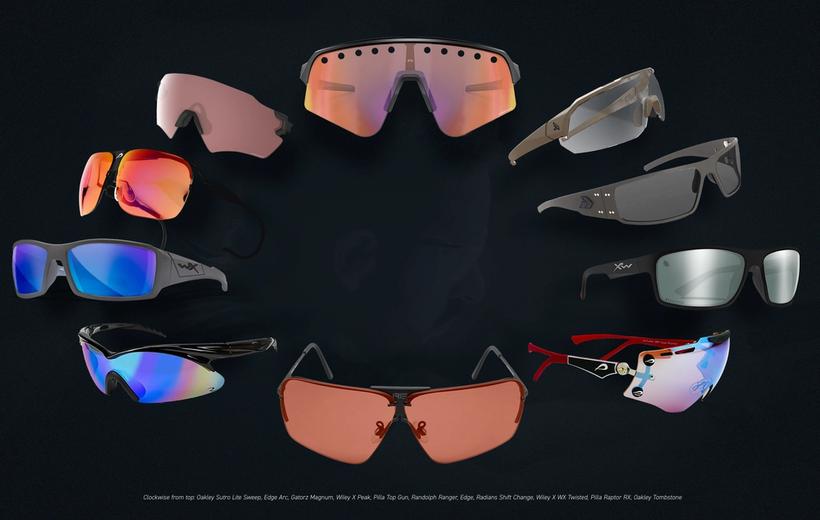
In our last column, we talked about why protective eyewear is important when handling firearms on the range. Just like the hearing protection we discussed, eyewear for the shooting sports comes in a wide variety of styles. Yes, eyewear makers take how their products look on you into consideration, but the style we’re talking about here has much more to do with function than it does fashion week in Paris.
Wrap-arounds
Single-lens, wrap-around eyewear that provides full coverage to the eyes and also to at least part of your temples is a top choice for pistol shooters for a number of reasons. First, the extra protection at the sides can be a big benefit on indoor ranges where the occasional empty casing rebounds off the lane divider and toward you. On outdoor ranges, that added plastic or acrylic also helps keep dust and dirt from getting to the eyes, a real problem on windy days, dry dusty ranges, and during action-shooting competitions.
Dual Lenses
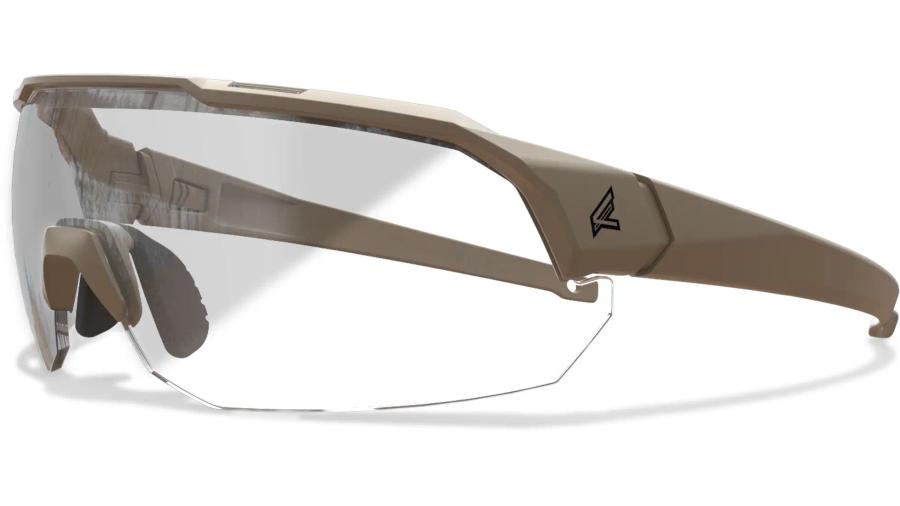
Traditional dual-lens designs tend to be used by shotgun shooters and those participating in action-shooting competitions. Because they lack the curved profile and temple coverage most wraparound styles provide, they benefit peripheral vision use, important when looking for targets in motion. Some makers of dual-lens shooting eyewear also offer lenses in various sizes for an additional level of customization.
Shooting Eyewear Performance Features
The most important feature to look for in shooting eyewear is its impact resistance rating. There are three to consider, and they should be applied to both lenses and frames:
- U.S. Civilian ANSI Z87.1
- U.S. Military MIL-PRF-31013
- European EN166
Most ballistic eyewear for the U.S. market will have a Z87+ marking somewhere on the lens/lenses and frame that indicates it meets ANZI Z87.1 impact testing. You may also find the EN166 markings if the eyewear has been subjected to that standard’s testing, similar to ANSI. Eyewear tested under the more rigorous U.S. Military MIL-PR-31013 protocols may be listed on the military’s APEL—Authorized Protective Eyewear List.
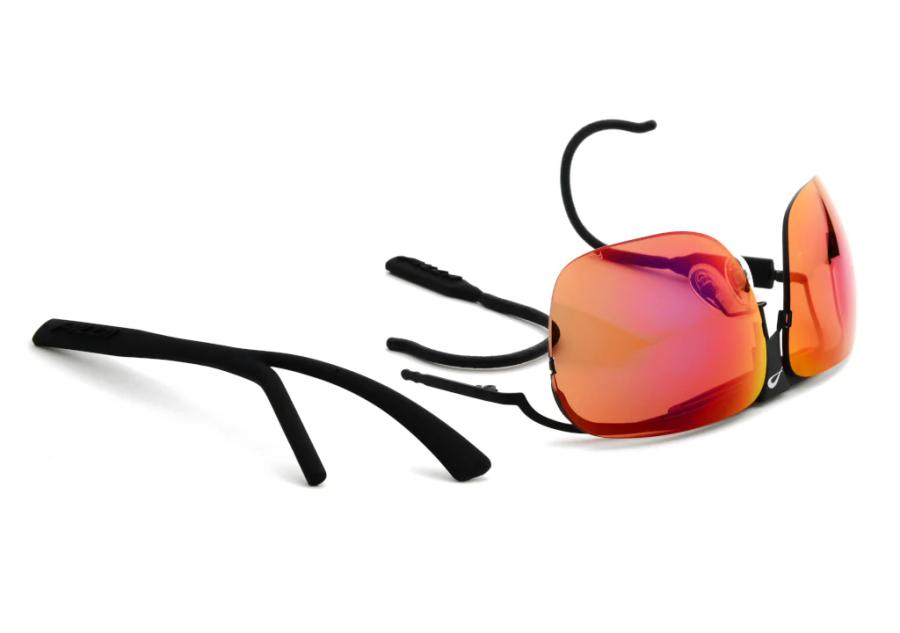
Beyond this safety baseline, features that can greatly enhance your shooting experience abound. UV protection is great for outdoor use, and polarized lenses can also be found. Adjustable temples help customize fit. Most wraparounds have a triangular, soft rubber or plastic nosepiece with ridges to help the glasses stay in place, especially when you sweat. This nosepiece is often designed to be removed and replaced as needed. Dual-lens models will mostly have the two-pad design on fine wires. This design accommodates some level of adjustability for comfort, while also sitting the glasses further away from the face than wraparounds. Most dual-lens models will also have larger lenses than wraparounds, which tend to have a narrow profile in an effort to prevent fogging. Even better? Look for shooting eyewear with an anti-fogging feature.
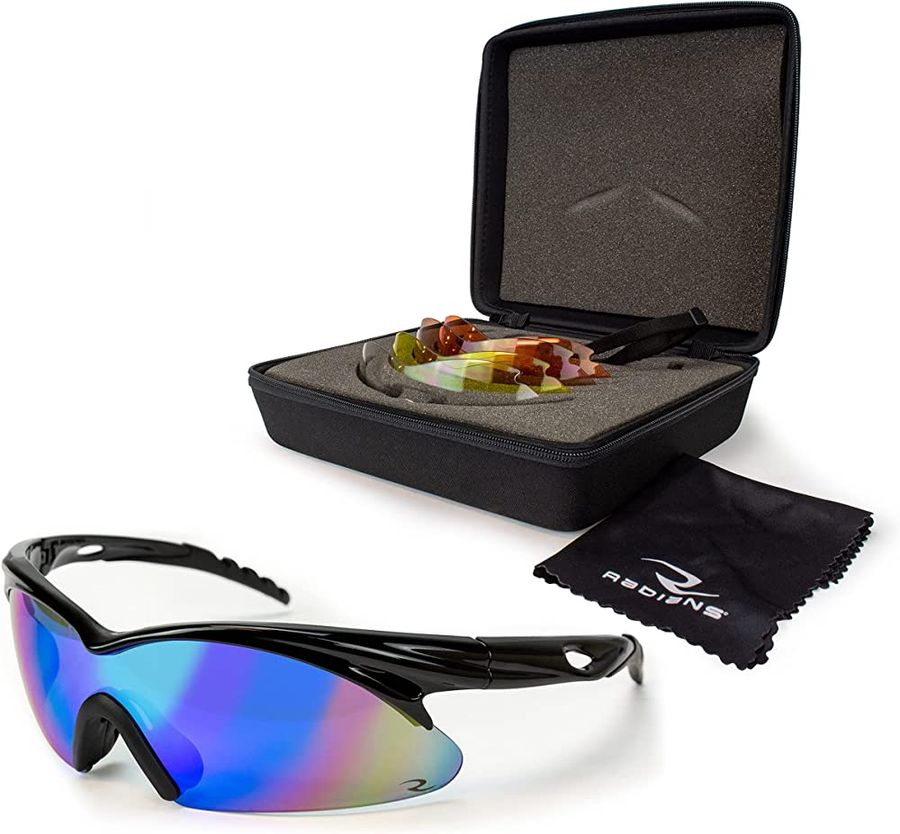
Sporting clays shooters really pioneered the trend of interchangeable lenses in different colors. The ability to swap lenses not only addressed changing light conditions from bright sunlight to heavy overcast, they helped targets of different colors stand out against similarly colored backgrounds, and cut down on the harshness of some target colors (the standard bright orange, chartreuse, yellow, white, and even hot pink) in heavy sun. Pistol and rifle shooters saw what clay shooters were doing, and now it’s hard not to find shooting glasses that don’t accommodate replacement lenses. And the colors! There are dozens to choose from, many just subtle shades apart. You can easily find one that helps your white, orange, yellow, or green day or night iron sights stand out on any colored target, helps you better focus on your laser or the dot in an electro-optic dot optic, and accommodates different lighting conditions both on indoor ranges and outdoor facilities.
Temple design is also something to consider. Round, flat, wire, and adjustable can all be found. What you want to consider is how comfortable they are in general and also how they feel under your ear muffs. Ear muffs paired with a temple design that digs into your head or creates a headache-causing pressure point can quickly make your range time miserable. In that light, and as I suggested when shopping for over-the-head ear protection, try Amazon and use the free return policy if you’re an Amazon Prime member until you find the pair that’s right for you. That’s not to say your local firearm retail store isn’t a great place to shop, but unless it has a generous and flexible return policy, you probably won’t be able to take eyewear (or headphones, for that matter) to the range and shoot with them for a couple hours to see how comfortable they are, whether they slip or fog up, and whether you can see everything you want to see.
Can You Shoot with Your Prescription Glasses?
Maybe, but probably not because your streetwear glasses are unlikely to have an adequate impact rating for shooting sports participation and target practice The good news is that if you require prescription eyewear for everyday use, there are remedies.
First, talk to your optometrist. If you can’t find any ANSI or EU marking on your current daywear lenses (those markings may be there but obscured by the frame), ask if his records indicate they were safety rated. If they were not, ask if he can order ANSI-rated lenses for you in your prescription. The one thing you may need to give up, in this case, are ANSI-rated frames.
The second way to solve this problem is to order them from one of the many companies that offer prescription lens services with frame and lens designs for the shooting sports. Marvel Optics, CA Glasses, Tactical Rx, SportRx, Wiley, and RE Ranger, are just a few of the many options out there, and there are more than a few that offer bifocal options.
Something for Every Budget
You can find protective eyewear designed for the shooting sports for under $10. In fact, if you were loaned eye protection for your first-time shooting instruction class or initial range visit, there’s a good chance it was this model by Radians. You know what? There’s not a damn thing wrong with them. They meet ANZI Z78.1+ standards, have temples that can be adjusted and no-slip nose-piece, offer great UV protection, and come in five different lens colors.
Can you do better? Sure, but of course that comes with a price. You’ll find higher-quality shooting optics from name-brand makers starting in the $40-ish range and running well into the $200s. Glasses sold with sets of interchangeable color lenses will cost more, as will custom-ordered glasses with prescription lenses.
Having worked my way through numerous sets of shooting glasses over the decades, my advice is to spend a little more than you think you may want to and ensure the glasses are comfortable, particularly under headphones. If I had one feature I’d want for indoor use, it would be anti-fog lenses, and for outdoor use, interchangeable color lenses. I would absolutely stay away from the ultra-cheap, all-plastic glasses with wide side guards and the big rectangular lenses that so many ranges tend to lend out, you know, the ones you might have used in your high-school shop class. While they serve the basic purpose of protecting your eyes, they are uncomfortable, never fail to fog up, and offer no customization. They also scratch far too easily, often to the point that, after just a few uses, you’ll have anything but a clear view through them.