
Essential Gear for the Firearm Range—Hearing Protection
May 30, 2023

By Jennifer L.S. Pearsall
Noise-induced hearing loss is permanent—and preventable. Don’t skimp on this essential piece of gear.
Every single one of us passionate about firearms and shooting sincerely hopes every new person who gives it a try finds that same level of enjoyment and entertainment. If that describes you after a couple trips to the range and you know you’ve been bitten by the bug that comes from skillfully drilling holes in paper targets, you’re probably already thinking about how to spend more time at this new pursuit. You’re also probably wondering about what gear you’ll need to do it.
The truth is there is no end to the shooting gear you’ll acquire over time. No gun owner I’ve ever known is anything less than a bonified gear junkie. But that’s nothing that should steer you away from what might very well be your new favorite pastime. Every pursuit, short of checkers and chess, comes with boatloads of gear. Think about the last thing you dived into. Skiing? Horseback riding? Backpacking? Canoeing? Paddleboarding? Camping? Tennis? Pickleball? Now think about how much of your garage and how many closets are devoted to all the stuff those hobbies require. Go ahead, I’ll wait … .
While it’s likely you’ll become a gear junkie just like the rest of us, you may also not want to make a huge investment in high-end gear when you’re starting out. Fair enough, but I’ll add two points to consider. One, having pursued several shooting sports with zeal over many years, I continuously upgraded my gear because I started with the cheap stuff, and it just didn’t cut it as my skills and scores improved. In retrospect, if I’d started with even a step or two up from the cheap seats, I’d have saved thousands of dollars during the some 15 or so years I competed and I’d probably have gotten better at the sports I’d chosen faster. Second, if I were to start from scratch and do it all over again, there are three items that would have made my days on the range more comfortable and enjoyable right off the bat: hearing protection, eye protection, and the right range bag. Let’s tackle hearing protection first.
Ear Protection
Ear protection comes in all sorts of forms and price points. Here’s a rundown and some tips to help you decide.
- Foam ear plugs—
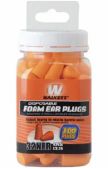
- You should buy a dozen packets of these, including some connected by a soft-plastic string. They get most of the job done and are great both in an emergency (e.g., you left your other ear protection at home), and for doubling up under ear muffs. Notice I said they get “most” of the job done. Inserted properly, good-quality foam ear plugs will reduce a great amount of range noise—but not all of it. If you have someone in the lane next you who’s shooting a compensated pistol in a hot caliber, you’re probably going to be uncomfortable, though your hearing will still be largely protected. Another drawback is that they’re generally good for one-time use, and if they loosen up while you’re shooting, your hearing will be compromised.
- Molded ear plugs—
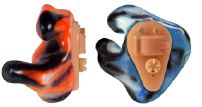
- These are definitely a step up from foamies. I discovered them years ago when I was shooting competitive sporting clays and never looked back. The soft/solid silicone plugs were produced out of molds taken from each of my ears, and they provided an excellent seal that didn’t come close to giving me that water-in-your-ears stuffy feeling some ear inserts can cause. They were ridiculously comfortable, and because I was shotgun shooting, there was no ear muff cup to get in the way of the gun stock on my shoulder. Best of all, they never changed shape and came clean with a little warm water and dish soap, so they lasted forever. Today custom ear plugs of silicone or soft acrylic are a cinch to find via a Google search. You can also find them with electronics that allow you to hear normal conversation while cutting out the high decibels of gunfire.
- Over-the-head ear muffs—
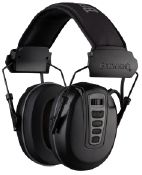
- These run the gamut in styles and pricing. On the low end are those with thin plastic housings and a flexible vinyl or plastic covering over the foam on the inside of the cups that fits around your ears. Far on the other end are those loaded with advanced electronics, including Bluetooth. Outside of shotgunning, where I still prefer to use my molded ear plugs, I would never start on the low end. Such ear muffs tend to have cups with a thin overall profile and lack durability; the vinyl over the foam often deteriorates due to sweat, and it also tears easily, leaving the foam exposed. But the real detraction is their lack of comfort. I also find them hot, and many on the really inexpensive side lack adequate adjustment regarding how they fit over your head. Now, that’s not to say all budget-saver earmuffs are a waste—Peltor, one of the best names in the business, makes a number of simple, over-the head muffs for $25 or less—but if you can afford more, I’d absolutely opt for a muff with electronics. You’ll be able to hear range commands and your shooting partners or the people in the lanes next to you almost as easily as you would if you were sitting next to them on a park bench, and the cut-off response to gunfire is instantaneous. As you might imagine, electronic ear muffs have a wide price range dependent on the number of included features. You’ll find the vast majority in the $100 to $200 range, though there are several brands and models that run in the $500 to $700+ range. Unless you’re ready to jump into competitive shooting, all in, cannon-ball into the pool, there’s no sense forking out that upper range. But, if you can manage something in the couple Benjamins range, do it. Once you start spending more time on the range, the extra comfort you’ll enjoy and the ability to converse with others on the line will be worth the price.
One last note on over-the-head muffs: Try on as many models as you can and make an effort to discover what’s the most comfortable for you. I often experience headaches from headbands that pinch too tightly, so shopping for a set of muffs that lessens that didn’t cause that problem was essential to finding the one that was right for me. If you really want to try a bunch before you commit, shop through Amazon where, if you’re an Amazon Prime member, you can usually return for free.
Noise Reduction Rating
For whatever ear protection you decide on, the one specification you should pay attention to amongst all the marketing descriptions and specifications you’ll encounter is the Noise Reduction Rating or NRR.
Noises around the 70 decibel (dB) mark sustained for long periods can begin to damage your hearing. Up that to the level of 120 dB and the damage can be instant. Normal human conversation runs about 60 dB, your leaf blower is likely somewhere in the 80 to 85 dB range, and a person yelling directly into your ear runs up to 110 dB.
Most unsuppressed gunfire runs 140+ dB, so, when shopping for hearing protection, you’ll want to search for those products that have an NRR of somewhere around 22. I found numerous models that listed their NRRs at 19, and that may be fine, depending on your shooting situation. If you’re shooting on an enclosed indoor range that has numerous shooting lanes and allows a robust range of calibers, including magnum rifle rounds, you’ll want ear protection with the highest rating. Likewise with an outdoor range in which rifle shooting and handgun shooting take place on the same line, especially those ranges that have a roof over the line that amplifies gunfire. Working on a smaller range that allows pistol shooting only, you may be just fine with something in an NRR 19 rating. Remember, you can always add foam ear plugs under an ear muff with a lower rating.)
No matter what you choose, being comfortable and adequately protected are a big part of enjoying time shooting on the range. More importantly, hearing protection is critical to keeping your hearing at its best. Noise-related hearing loss is irreversible, and quality hearing protection worn when shooting can go a long way toward keeping you out of the audiologist’s office.