Instructor Interviews—Finding a Shooting Range, Part II
April 4, 2023

By Jennifer L.S. Pearsall
Firearm instructors, as you might expect, come with all sorts of personalities, talents, opinions, and attitudes. Finding one that jives with your personality, talents, opinions, and attitudes makes all the difference when it comes to ensuring your first shots aren’t your last shots.
We last talked about why finding a handgun range is a critical first step in deciding to own a firearm for the first time. You wouldn’t buy a car without having learned how to drive beforehand, would you? Same logic applies here.
I’m going to cut to the chase and say it out loud: No one is born knowing how to handle and shoot a gun safely. Some may take to the necessary skill sets to be an accurate shooter better than others, but before you can even get there, you need someone to show you the ropes and keep you from injuring yourself or someone else. Those someones are certified shooting instructors, so let’s talk about how to find the one that’s right for you and what you want to accomplish.
Can I Speak with the Instructor?
In our first column about finding a range for your first-time instruction, I gave an example of what the ideal conversation with range staff might look like, one that included the employee on the phone saying they had an instructor they thought would be a great fit for you. Super—that means you’ve told the range enough about yourself and why you want to learn to shoot that the range feels confident making a recommendation. You could stop there, but why not take it one step further and talk to the instructor directly? Any range worth its salt should be more than willing to make that conversation happen.
So, what should that conversation look like? If the range has provided you with the list of topics that’ll be covered in your introductory class, then any number of questions can be on your ask-the-instructor list:
- What kinds of firearms and calibers do you use for the first shots and why?
- Do you cover both revolvers and semi-automatics in the class?
- The range recommended a small group class, but I think I might be more comfortable with one-on-one instruction. Would you tell me the pros and cons of each?
- Can I bring my own firearm to the class?
- Do I need to have a holster?
- I’m taking this class because I’m considering buying a handgun for home defense. Do you provide guidance on the types of guns I should be considering and recommend other classes I should take?
- How much shooting will I do in the class?
- Is ammunition included with the class or will I need to buy that when I get there?
Really, you can ask anything that comes to mind, and, at this point, there are no stupid questions. But the one thing few people think to ask about is the instructor’s background. You can tell a lot about a person by the conversation on the phone. Are they enthusiastic about teaching you and teaching beginners in general? What got them interested in shooting and teaching? What certifications do they hold? You might also ask if they have a military or law enforcement background. Not everyone’s comfortable with that these days, and that’s fine, but remember that most people with those career backgrounds have a wealth of experience with firearms and, if they’re teaching at a public or private range, they’re able and to pass that knowledge on to you.
Overall, pay attention not just to the answers but also to the tone of the conversation. An instructor providing rote, by-the-book answers, who sounds bored, who doesn’t engage with you and ask why you want to learn to shoot, and especially one who conveys the attitude that this is all serious business might get the job done, but is that all you want? No! Whether you’re coming to this first lesson with enthusiasm or apprehension, you want a great experience. Not just okay, not just good, but a great class that leaves you wanting more, more, more. Why? Because this is not a one and done deal.
Learning to safely handle and accurately shoot any firearm takes time, instruction, and practice, but the first steps to get there can go two ways. A thoughtful, skilled instructor who “gets” you can help set you on a path to be successful no matter what your end-goal of owning a firearm is. If you have the bad and truly unusual fortune to run into the odd duck who leaves you disappointed, unsure of what to do next, or more apprehensive than you were when you first arrived at the range, that instructor hasn’t done their job—and it’s almost a guarantee you will cross “learn to shoot” off your bucket list of life accomplishments.
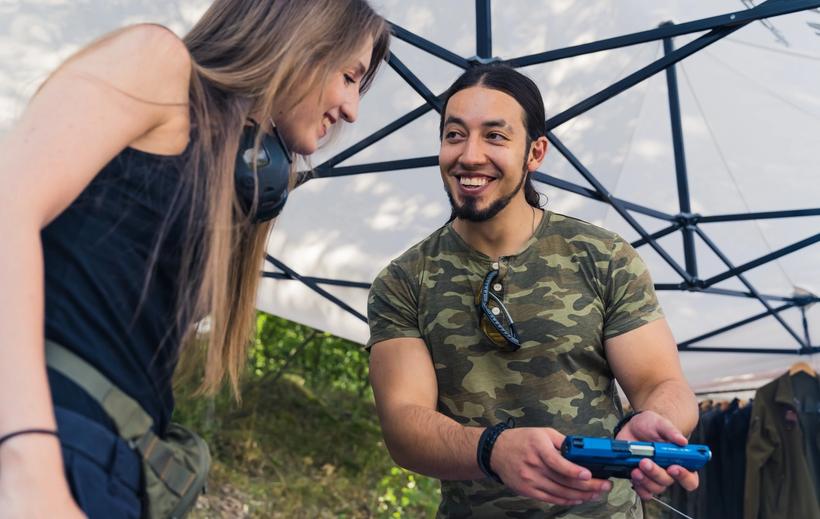
To put a finer point on this, while learning to shoot is indeed serious business, it should also be enjoyable. You do not need an instructor whose methods are a direct reflection of their days as a Marine Corps drill sergeant (well, unless that’s something you respond to). You do not need someone who berates you or someone else for making a mistake. And you definitely don’t want one you overhear talking to other range staff about “what a pain the newbie classes are.” What you want, what you really, really want (earworm the Spice Girls!), is someone who still remembers how tickled they were the first time they hit a target—and can’t wait to see your grin when you do it too.