Prepping for Your First Shooting Class—Finding a Shooting Range, Part III
April 11, 2023

By Jennifer L.S. Pearsall
You wouldn’t go skydiving or zip-lining without asking a bunch of questions about the places and people running such excursions. Your search for a range that offers the experience you’re looking for should take the same approach.
We’ve now talked about how to find a handgun range and encouraged you to have a conversation with your potential instructor before committing. If you’ve done this much homework and everything feels good, you’re off to a great start, but there are still some details you should cover before you hand over your class fee.
What’s Included?
You almost surely asked either the staff of the range you’ve chosen or the instructor of the class you want to take what’s included in the fee. The range staff and instructor get that question all the time, and, so, likely have a pretty standard response. However, that doesn’t mean all the bases have been covered. Staff who recite the same information over and over again in almost any industry, from ranges to restaurants to bowling alleys, sometimes forget what it’s like to be a first-time visitor or erroneously assume that some things are common knowledge. Here are five questions to ask that could head off a surprise (or surprise expense) during your first visit.
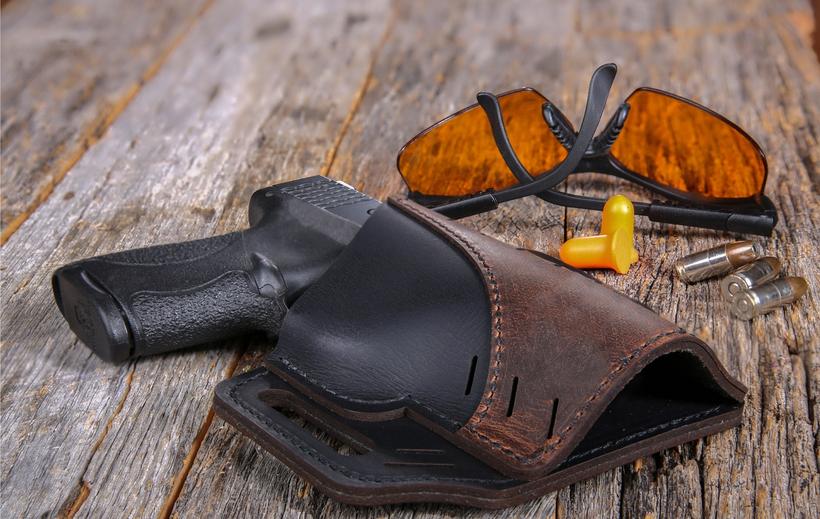
- Are eye and ear protection included? Any time you’re shooting, indoors or out, you must wear eye and ear protection. For your eyes, glasses that have an ANSI/SEA Z87 high-impact rating are the standard. Ear protection can be as minimal as the cheap, soft-foam insertable ear plugs, but for firing anything larger than a .22-caliber, especially on an indoor range, over-the-ear sound-reducing muffs are a much better choice. If you’re particularly noise-sensitive, pair the foam plugs with the muffs. Top-end ranges may have electronic ear muffs available for class students and range rental and, if so, take advantage of them, as they are best-in-class at safely reducing the decibel level of gunfire while allowing you to clearly hear conversation and range commands. If the range didn’t tell you up front, ask if protective eye- and ear-wear are provided as part of the class you’re taking. The majority of the time they will be, though some ranges have been known to charge a small rental fee (and just as often enough will refund that rental fee if you later buy eye or ear protection).
- Is ammunition provided? This could go either way. Many first-time-shooter group classes utilize .22-caliber rimfire pistols and revolvers, and because you’ll spend half the time in a classroom setting and half the time on the range observing instructors working with your fellow classmates and having your own time on the target, there won’t be a large number of rounds fired. With such curricula, the range often supplies the required and inexpensive .22 LR ammunition. Some, of course, will not, so ask how much you’ll be expected to pay for the standard box of 50 or 100 rounds. If you do not want to take home leftover ammunition, ensure that you’ll be able to fire all the rounds you buy either in the class or after the class with a shooting lane rental. Likewise if you’re shooting any other caliber during your first class (.38 Special revolvers and 9mm semi-automatics are common in first-time shooting-skills classes).
- Do I earn any kind of certificate for completing the class? This isn’t about something to tack to the wall of your home office. Rather, successful completion of basic safety and firearm handling classes can satisfy the education requirements many states have in place for obtaining a concealed carry license. Some states or locales also require such education before you’re allowed to purchase a firearm or ammunition. You may not need or want that permit right away, but having that certificate in your back pocket when you do go to apply for your carry license or satisfy an education requirement for firearm ownership will put you one leg up on the process.
- What ID do I need to take my first firearm safety class? The answer to this depends on where in the U.S. you live. In the least restrictive states, a valid, non-expired driver’s license, passport, or state-issued photo ID that shows you’re at least 21 years of age will be the minimum. On the other end of the spectrum are states like Illinois. Illinois requires its citizens to obtain a Firearm Owners Identification Card (FOID) before they are allowed to purchase ammunition or firearms. We read through the range and class requirements of several ranges in that state, and while it looks like you probably don’t need this permit to take a first-time novice shooter class, every range is different, so ask the question. Too, because the laws change frequently in states like Illinois, New Jersey, New York, Rhode Island, California, and others with stringent requirements regarding firearm and ammunition ownership and possession, a range may require its state’s version of the Illinois FOID in order to protect itself from liability. Ask the staff and/or the instructor of the range you’re interviewing exactly what IDs are required beyond a driver’s license in order to take their courses and, afterward, buy ammunition or rent a gun for time on the range after your class is over.
- Is there a rain check or guarantee policy for my class? First-time shooting instruction classes have been in high demand following record gun sales across the country during the first and second year of the pandemic. Classes can be booked months in advance and frequently have waiting lists in the event of a dropout. What you want to make sure of is that if your kid gets sick or you have a last-minute deadline at work you can’t miss, you can use the deposit or full fee amount you’ve put down to reserve your spot in another class.
As for guarantees, I can’t say I’ve ever seen one, but “Your satisfaction guaranteed or your money back” is common enough in a lot of consumer-facing industries. Doesn’t hurt to ask. Just don’t be a jerk and ask for your class fee back because you didn’t instantly become an expert marksman during your first hour on the range. If, on the other hand, the instructor was rude, unsafe, or otherwise out of line, talk to management and explain, calmly, what you observed. If an instructor is an ongoing problem, rather than a person having the odd bad day, the range probably already knows about it. Your feedback can help the staff make smart choices about working with that instructor to modify their behavior or replacing them with someone better attuned to what customer service means.. Having this kind of conversation can also open the door to retaking the class with another instructor without paying a second fee.
The vast majority of today’s firearm ranges and shooting instructors sincerely want to see you succeed. They know that no one is a natural-born marksman. Handling a firearm safely, accurately, and skillfully takes time and practice, and because every single instructor out there had someone, probably even several someones, teach them everything they know, most genuinely believe it’s their obligation and deeply felt responsibility to pass on what they know to anyone who’s interested.
If you’re reading this, you’re interested. Find the range and instructor that feels right to you, and the rest will fall into place.
In our next column, we’ll talk about what you can expect during your first safety and firearm handling class or lesson.