Shooting Instruction—Should You Go Private or Group?
July 6, 2023

By Jennifer L.S. Pearsall
There are benefits to both class designs—and there’s not a damn thing wrong with taking advantage of both.
One of the choices new shooters are faced with is getting their first instruction in a private one-on-one setting or in a multi-student class. There are benefits to both, as well as a couple potential drawbacks, and both are worth your consideration.
Just You and the Teacher
Almost everyone thinking about learning to shoot is worried about two things: not being able to hit the target and looking like a fool in front of others. Let me help you get rid of both notions.
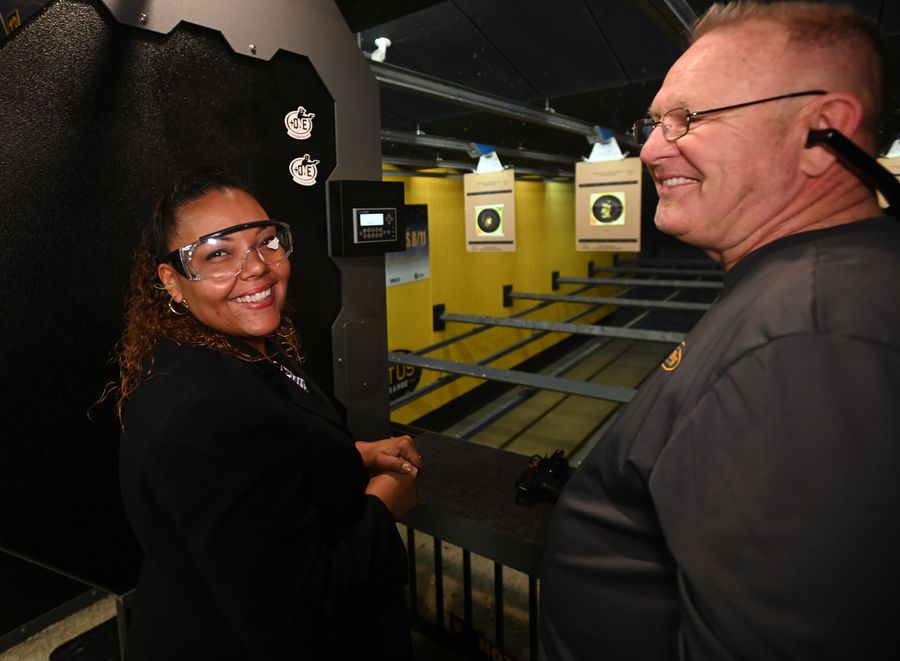
Any certified instructor worth the paper on which their NRA instructor’s certificate is printed will be able to get you to hit the target. It might not be the first shot, or the second (though I’d bet it would be either), but any decent instructor can quickly assess what you need to refine within those first few shots and get you on the paper in fast order.
As for making a fool of yourself, you can look at that in one of two ways. Either you think everyone truly looks foolish every time they try something new or everyone merely looks awkward.
Awkward is really what it is. Awkward was what you were the first time you got behind the wheel of a car, walked in high heels, rode a horse, swung a tennis racket, or attempted origami. I can’t tell you not to feel foolish, because that’s up to you. I’m just telling you there’s a choice in the perspective.
Either way, awkward or foolish, you may not want a bunch of other folks seeing you that way. And that’s okay! Book a private lesson. You’ll get exactly what you want—that time to look awkward or feel foolish without anyone besides the instructor seeing it. Oh, and by the way, a good instructor will never let you know they might think you look awkward, one, because they’ve been there, and two, because they get a lot of satisfaction from getting you on target and comfortable with your gun.
There are other benefits to private instruction. You’ll almost certainly get to do more actual shooting than you will in a first-time-shooters group class. You will get to have a lot of conversation with your instructor, asking all the questions you want, and all the instructor’s attention will be on you. If you’re particularly apprehensive or suspect you’re very sensitive to noise on the range, you can take this one step further and ask to take your lesson on a range closed to the rest of the public.
A private lesson can be a great thing to book after a group class for all those same reasons. You’ll get to ask questions there might not have been time to ask in your group class, and the individualized attention will absolutely help you work out refinements in grip, sight alignment, trigger pull, and shot-to-shot sight acquisition.
Group (Shooting) Therapy
Just as some want to minimize how they look to others when taking their first handgun shooting class, others take comfort in knowing those around them are exactly in the same boat: None of us know anything about guns and we’re all here to fix that. In fact, and even though you can and should benefit from private instruction from time to time, especially if you go on to compete in one of the many shooting sports, it’s this camaraderie that really ties firearm owners everywhere together. Sure, we can be competitive—but I don’t know one shooter at the top of their game who won’t show someone else the ropes.
In a group class, one of the nicest benefits is that you’ll get to hear questions asked by your fellow classmates that you might not have thought of or felt uncomfortable asking. (See, there’s that foolish versus awkward thing again.) On the range, you’ll also be able to see what issues the others in your class are encountering and fixing with the help of the instructor, such as their grip, sight alignment, and trigger pull.
An example: When I was shooting competitive sporting clays and started working with a coach, he sometimes held small group classes of four on the skeet range. Part of that class included having each of us, in turn, stand behind another shooter and watch where their shotgun’s barrel was when they fired. After just a few times doing this, you could tell before the person on deck pulled the trigger whether they were going to miss behind the bird, hit it, or miss in front of it. That lesson, in turned, enabled me to eventually hit specific sections of a target—left edge, nose, rear edge, etc.—in later private lessons. (This is something called “hard target focus” that applies to shooting with any type of firearm and something we’ll get into in a future column.) I doubt I would have progressed so rapidly in refining those skills without those group classes.
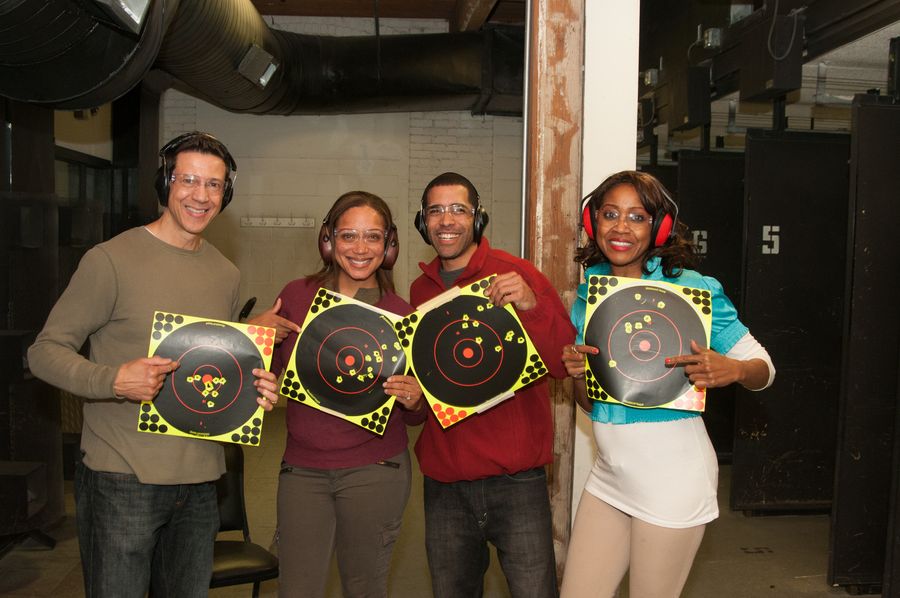
The one big plus you’ll get in a group class? I kid you not, it’s every one of you holding up your hole-ridden targets at the end of class for the group picture. When you’ve all started with the same blank slate and arrived at the same shot-up target together, you’ve earned not just a new set of skills and a gold star from the instructor, but memories for a lifetime and, likely, a few new friends to keep the momentum going.